Reusable PVC RFID Tags vs. Printable RFID Stick Tags: Which Is Right for Your Jewellery Business?
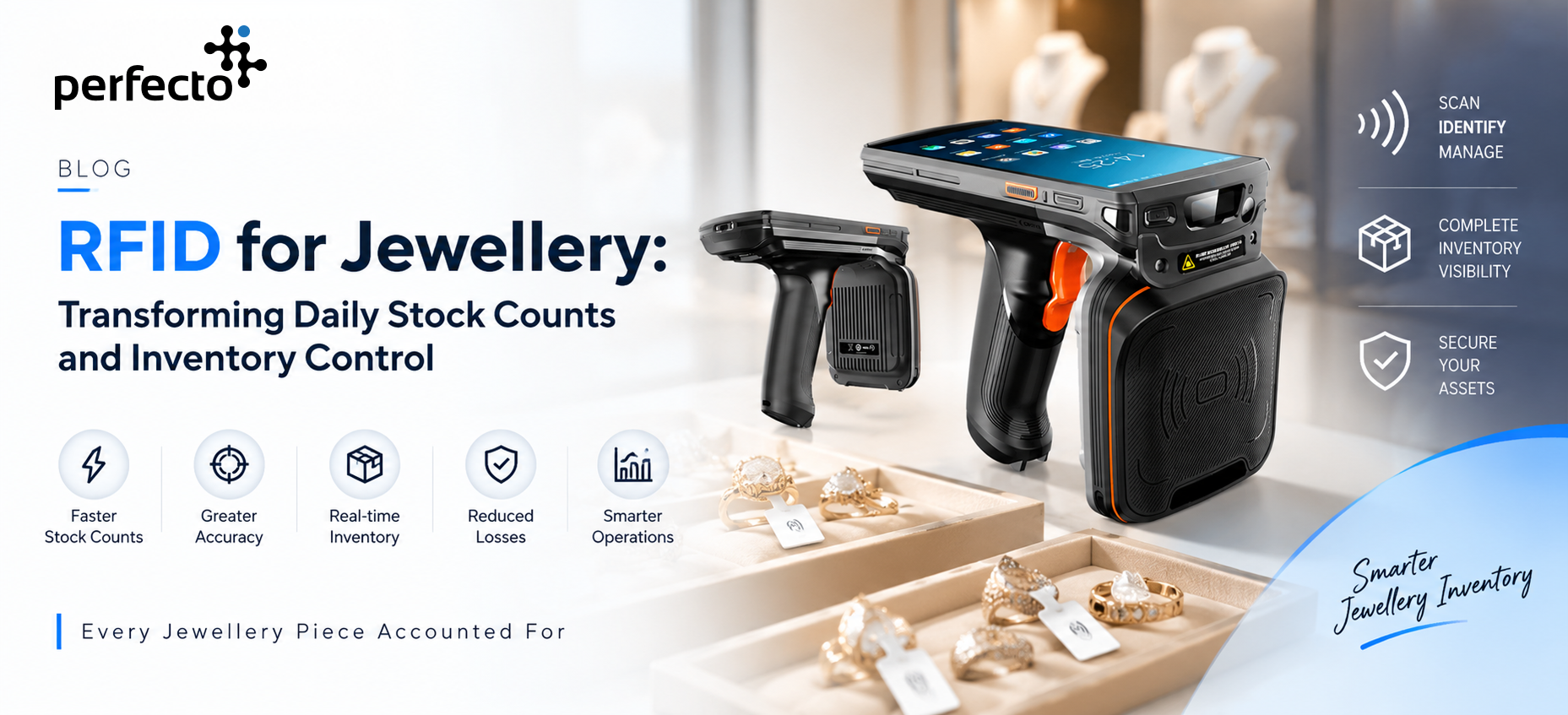
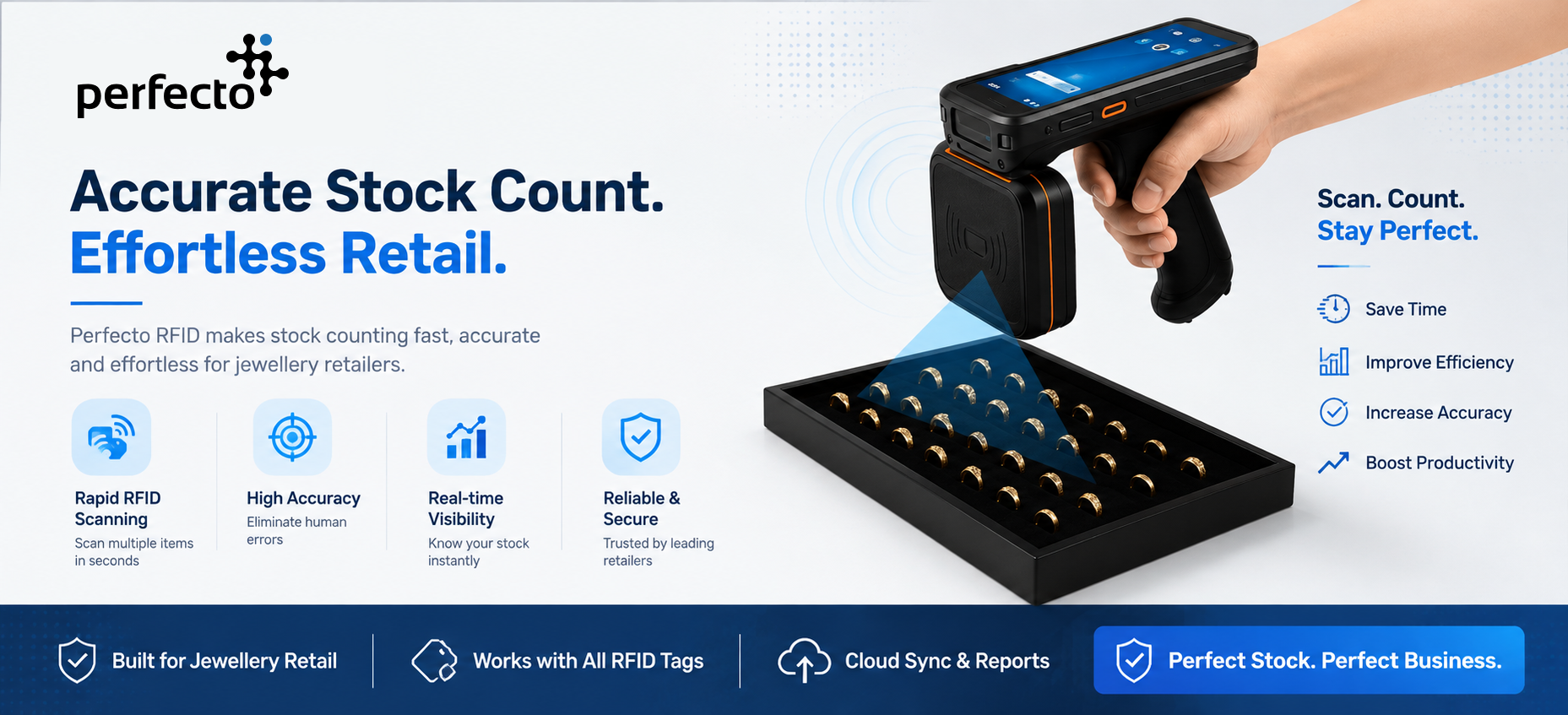
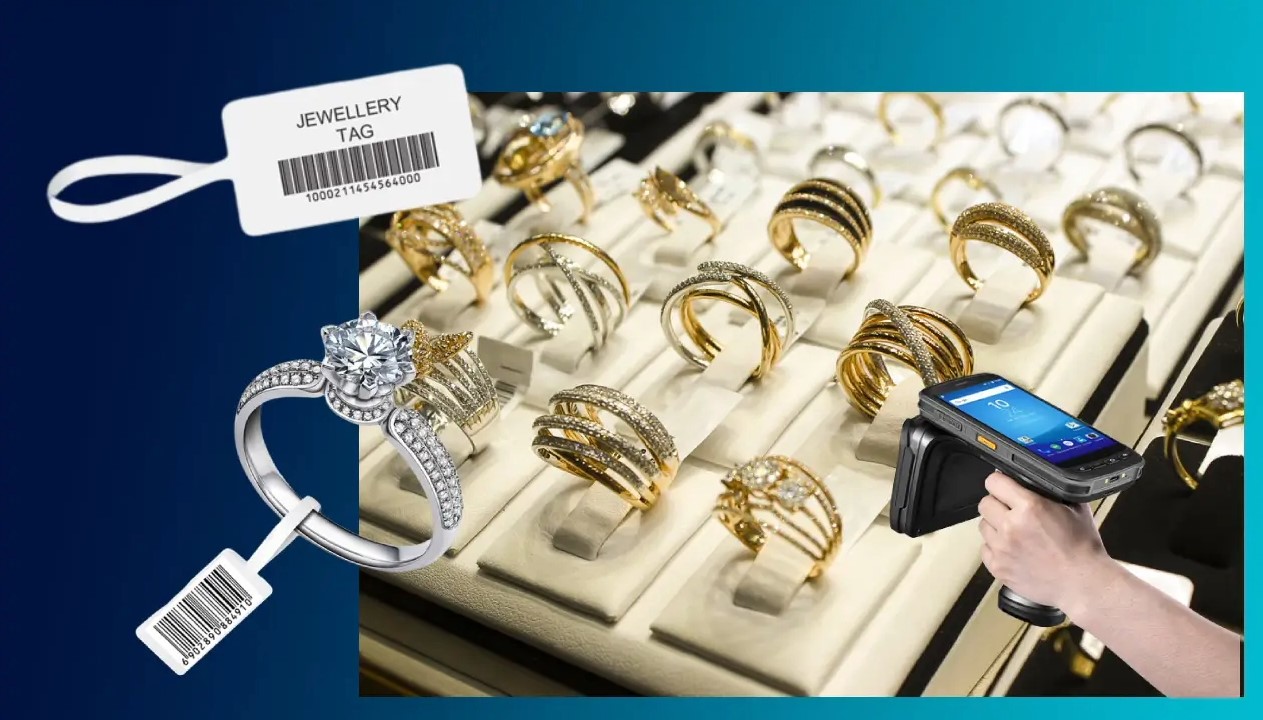
RFID technology is helping jewellery retailers, manufacturers and warehouses count stock faster, improve inventory accuracy and investigate missing items more efficiently.
However, choosing the right RFID tag is just as important as selecting the reader and software. Jewellery businesses generally have two practical options: reusable PVC RFID tags and printable RFID stick tags.
Both tags support RFID-based inventory counting, but their cost, appearance, printing requirements and operating processes are different.
Option 1: Reusable PVC RFID Tags
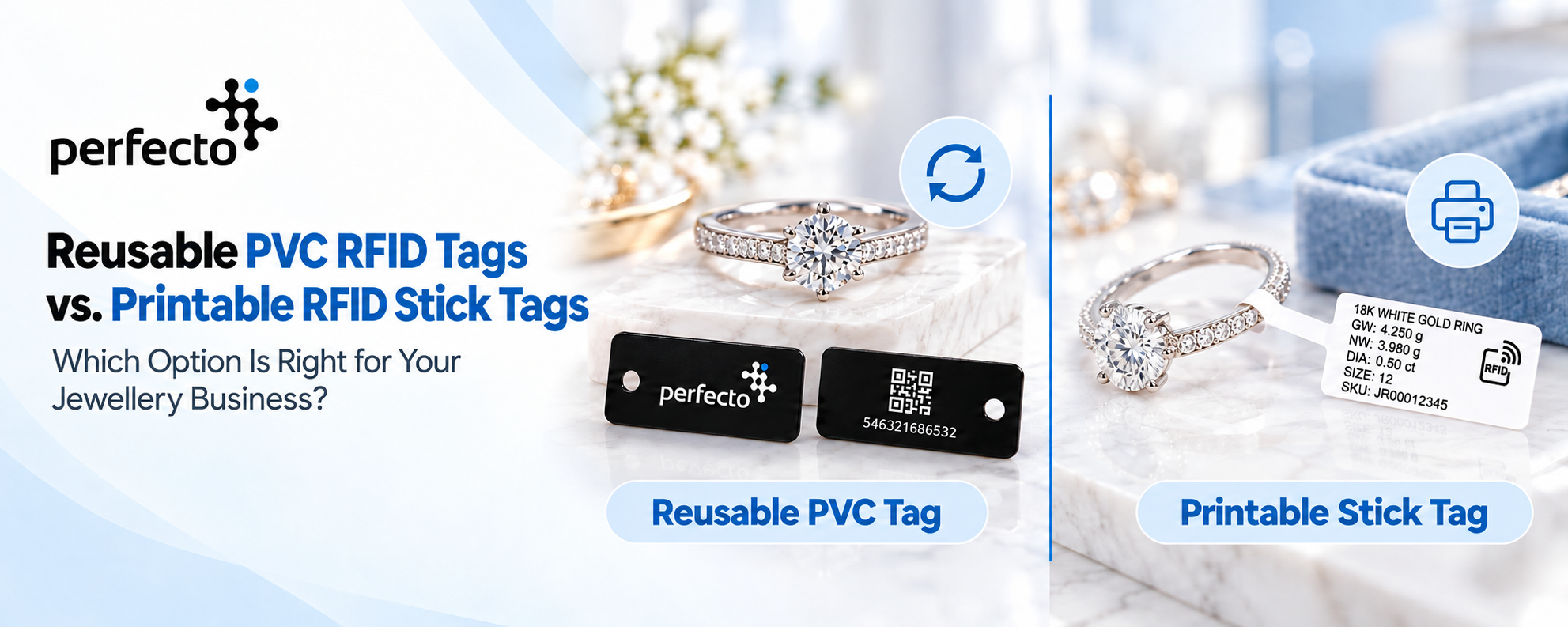
Reusable PVC RFID tags are durable cards designed to be tied to jewellery items. They can be customised with the jewellery brand’s logo, colours, QR code, barcode or unique identification number.
Because the information printed on the PVC tag is generally limited, employees need a connected software system to view the complete product details. When the RFID tag is scanned, the system identifies its unique ID and displays the linked jewellery information.
This may include:
- Product or SKU number
- Jewellery category
- Metal type and purity
- Gross and net weight
- Diamond or gemstone details
- Price
- Current location
- Inventory status
A QR code can also be printed on the tag to provide another method of accessing the linked product record, depending on the software setup.
Main Advantage: Reusability
The biggest benefit of a PVC RFID tag is that it can be reused.
When a jewellery item is sold, transferred or removed from inventory, the tag can be detached and assigned to another product through the software. The tag does not need to be discarded after every sale.
Although the initial tag cost may be higher, repeated use can make PVC tags more cost-effective over time—particularly for businesses with high stock turnover.
Best Suited For
Reusable PVC RFID tags are ideal for:
- Jewellery retail stores
- Showroom inventory
- Display jewellery
- High-value jewellery
- Frequently changing collections
- Businesses that want customised branded tags
- Businesses with an integrated inventory system
Important Requirement
A reliable software platform is essential for this model. Since complete product details are not printed on the tag, staff must use the RFID application, QR code or product management system to access the required information.
The software must also support tag assignment, unassignment and reassignment to ensure that every tag remains connected to the correct jewellery item.
Option 2: Printable RFID Stick Tags
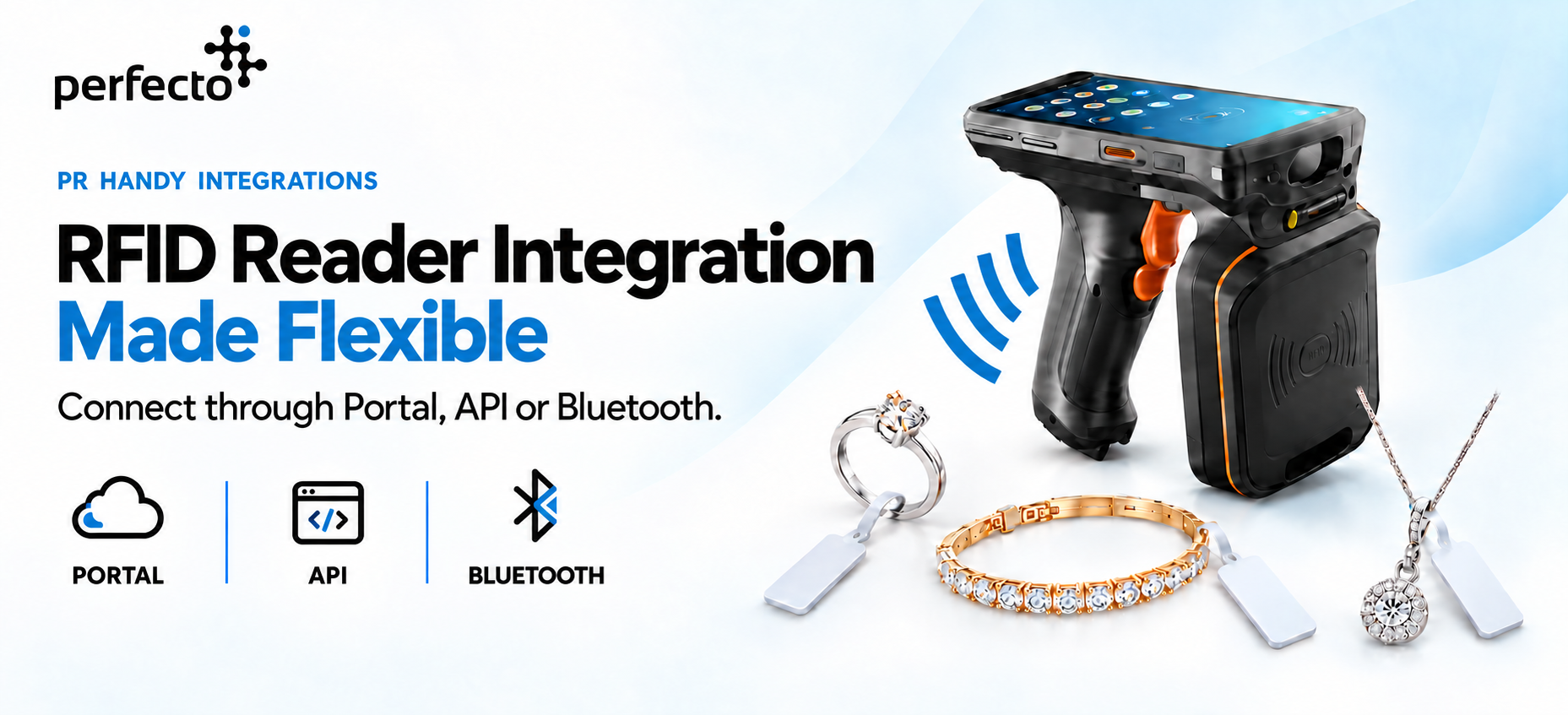
Printable RFID stick tags are attached directly to jewellery using a narrow adhesive or loop section. These tags are generally designed for single use.
A compatible RFID label printer is required to print and encode each tag. Basic product information can be printed directly on the tag, allowing employees to identify the jewellery without opening the software every time.
Printed details may include:
- Product name or category
- SKU or item number
- Metal purity
- Gross weight
- Diamond weight
- Barcode or QR code
- Short product identifier
Because the product information is visible on the label, these tags can be convenient for daily sales, stock handling and warehouse operations.
Main Advantage: Visible Product Information
The primary benefit of a printable RFID stick tag is that employees can view essential product information directly on the tag.
This can make product identification faster at retail counters, manufacturing departments, warehouses and stock-transfer locations.
The tag can also contain a barcode or QR code, providing multiple methods of identifying the item.
Single-Use Operation
Once a stick tag is attached to a jewellery item, removing it may damage the adhesive section or the tag itself. For this reason, it is normally treated as a one-time-use tag.
When the product is sold, the tag is removed and discarded. A new tag must be printed and encoded for another product.
This creates a recurring tag cost, but it may still be the preferred option for businesses that require product details to be visible directly on every jewellery item.
Best Suited For
Printable RFID stick tags are suitable for:
- Jewellery manufacturers
- Large warehouses
- Distribution operations
- Businesses requiring printed product details
- Jewellery with longer inventory cycles
- Operations already using compatible label printers
- Businesses that prefer one tag for each individual product lifecycle
Key Differences
| Feature | Reusable PVC RFID Tag | Printable RFID Stick Tag |
|---|---|---|
| Tag material | Durable PVC | Printable adhesive label |
| Reusability | Reusable | Generally single use |
| Branding | Logo and customised design | Limited printed branding |
| Product information | Mainly accessed through software | Basic details printed directly |
| QR code or barcode | Can be pre-printed | Printed for each product |
| Printer required | Usually not required for daily use | Compatible RFID printer required |
| Software dependency | High | Required for RFID, but basic details remain visible |
| Initial cost | Comparatively higher | Comparatively lower per tag |
| Recurring cost | Lower because tags are reused | Higher because every new item requires a new tag |
| Best for | Retail and reusable workflows | Manufacturing, warehouses and visible labelling |
Which Jewellery RFID Tag Should You Choose?
Choose reusable PVC RFID tags when you want a premium branded appearance, lower long-term tag consumption and the flexibility to assign tags to different jewellery items.
Choose printable RFID stick tags when your employees need to see essential product details directly on the jewellery and your business is prepared to print and encode a new tag for every item.
Some jewellery businesses may benefit from using both options.
For example, printable stick tags can be used during manufacturing and warehouse operations, while reusable PVC tags can be used for finished jewellery displayed in retail stores.
The Right Tag Needs the Right System
An RFID tag is only one part of the solution. Effective jewellery inventory management also requires:
- Accurate tag-to-product assignment
- RFID readers for stock counting
- Integration with jewellery inventory or ERP software
- Stock audit and reconciliation workflows
- Tag assignment and reassignment controls
- Location-wise inventory tracking
- Missing and excess item reporting
- User access and activity records
The right combination of RFID tags, readers and software can help jewellery businesses perform frequent stock counts while improving inventory visibility and control.
The best tag is therefore not simply the cheapest option. It is the one that fits your product lifecycle, operating process, branding requirements and long-term cost model.