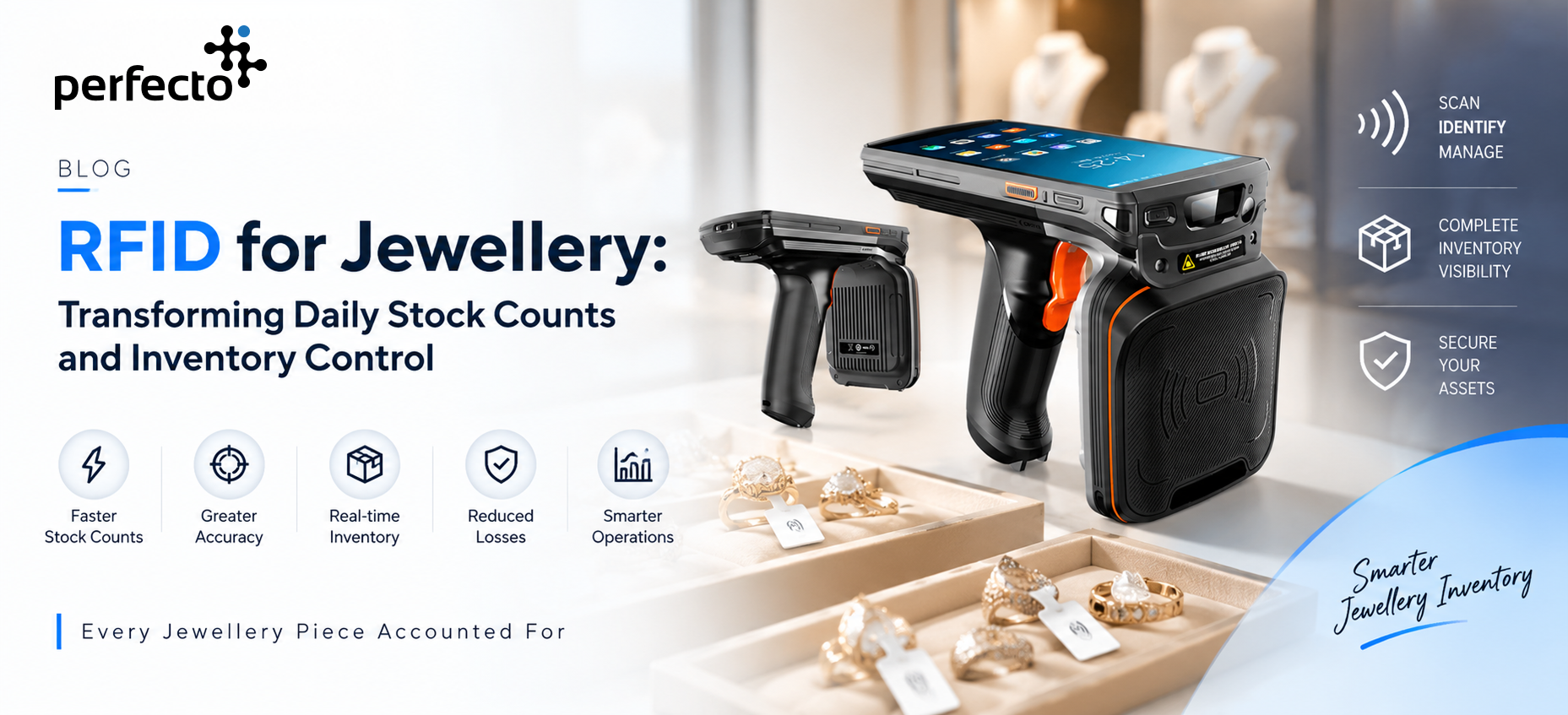
RFID for Jewellery: Transforming Daily Stock Counts and Inventory Control
Jewellery inventory is very different from conventional retail inventory. A single store may hold hundreds or thousands of high-value items—rings, necklaces, earrings, bracelets, diamonds and gemstones each with its own SKU, weight, specifications and value.
Because every piece matters, maintaining accurate inventory is critical. Yet many jewellery businesses still depend on manual counting or barcode-based processes that require items to be checked individually.
RFID (Radio Frequency Identification) is changing this process by making jewellery stock counting faster, more frequent and easier to manage.
The Challenge with Traditional Stock Counting
In a traditional jewellery store, employees may need to count products tray by tray or scan each barcode individually. For a large store, warehouse or manufacturing facility, this can become a time-consuming daily activity.
The challenge becomes even greater when jewellery moves frequently between:
Showcases → Vaults → Sales Counters → Warehouses → Branches → Exhibitions
When inventory counting takes too much time, businesses may perform full counts less frequently. This can delay the identification of missing, misplaced or incorrectly recorded items.
RFID changes this approach.
Count Multiple Jewellery Items Faster
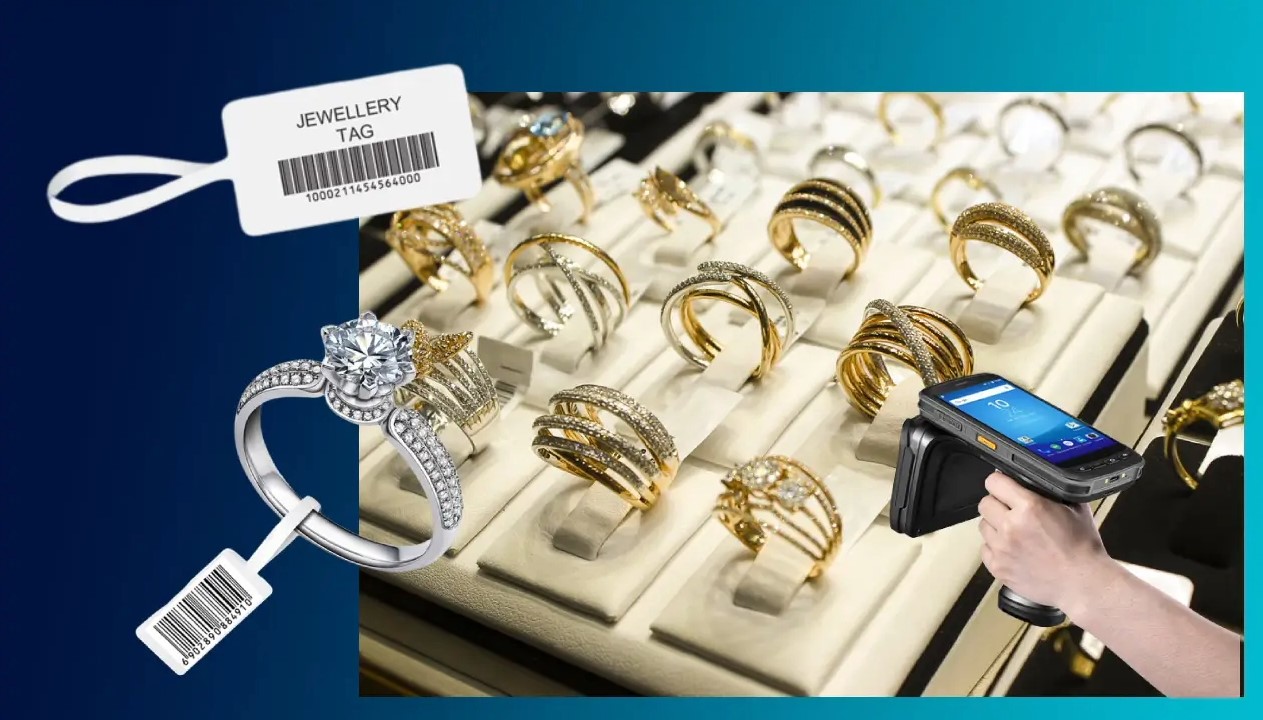
With UHF RFID, each jewellery item can be attached to an RFID tag containing a unique identification number linked to the product record.
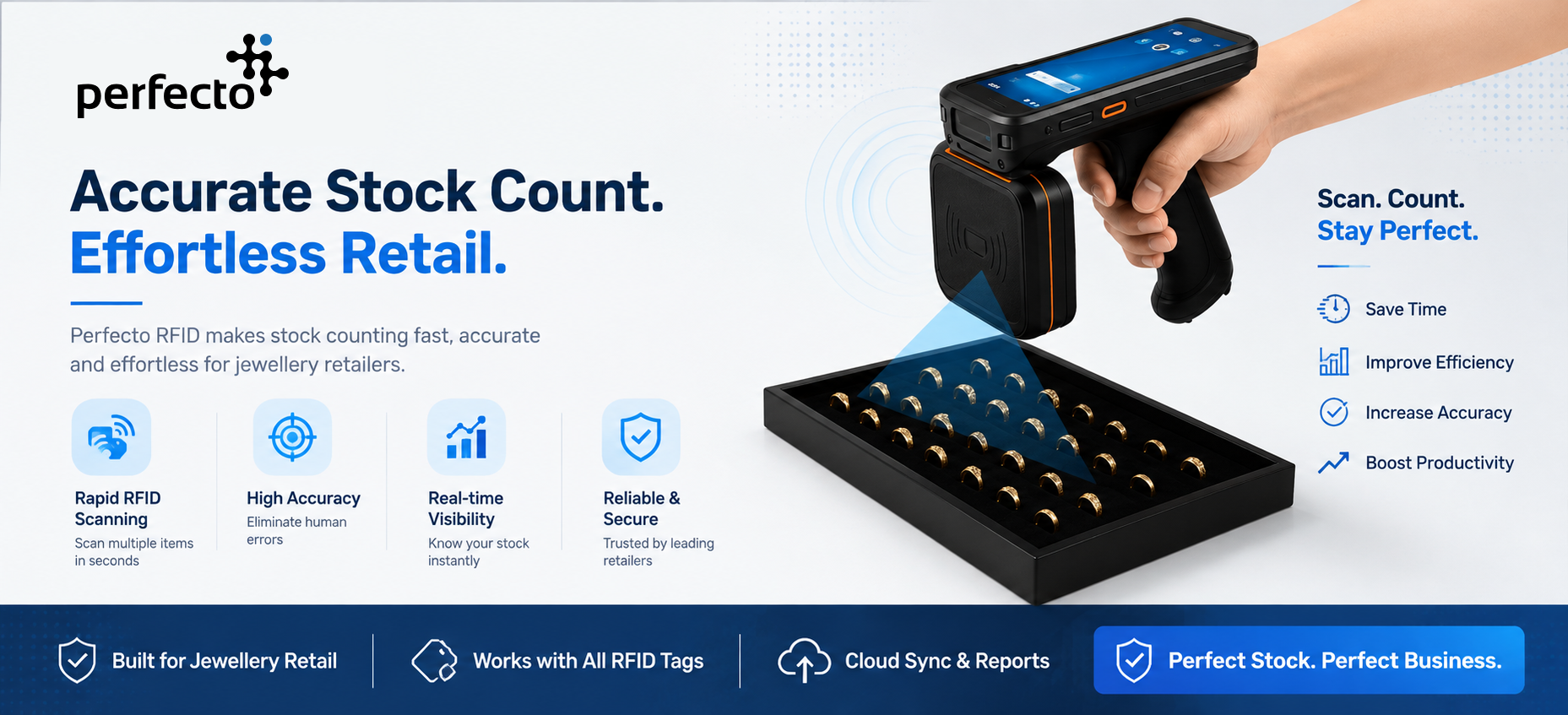
Instead of scanning every piece individually, employees can use an RFID reader to detect multiple tagged items within its effective reading area.
For example, a jewellery tray containing many rings can be scanned without locating and reading every barcode one by one.
The RFID software can then compare the physically detected items against the inventory expected by the ERP or inventory system.
The result can quickly highlight:
- Items found
- Expected items
- Missing items
- Unexpected items
- Stock-count differences
This makes cycle counting much more practical.
Make Daily Stock Counts Possible
One of RFID's biggest advantages for jewellery businesses is not simply speed—it is the ability to perform stock counts more frequently.
Instead of treating inventory verification as a weekly or monthly exercise, stores can build daily counting into their operating process.
For example, staff can count a showcase or tray at opening or closing time. Any difference can be investigated immediately rather than being discovered several days later.
For high-value jewellery inventory, faster discrepancy detection can be extremely valuable.
Beyond Counting: Better Inventory Control
RFID can become part of a broader inventory-management workflow.
When integrated with jewellery ERP software, RFID can support processes such as:
Purchase Inward → Tagging → Inventory → Daily Count → Stock Transfer → Exhibition → Sales → Reconciliation
Every physical RFID tag is connected with a digital product record containing information such as SKU, style, category, metal, diamond specifications, weight, location and inventory status.
This creates a stronger connection between the physical jewellery piece and its digital inventory record.
Useful Across the Jewellery Business
RFID is not limited to retail stores.
A manufacturer can use it for finished-goods inventory. A wholesaler can use it to manage trays and product movement. Warehouses can use RFID for stock verification and transfers. Jewellery exhibitions can use it to reconcile products before and after an event.
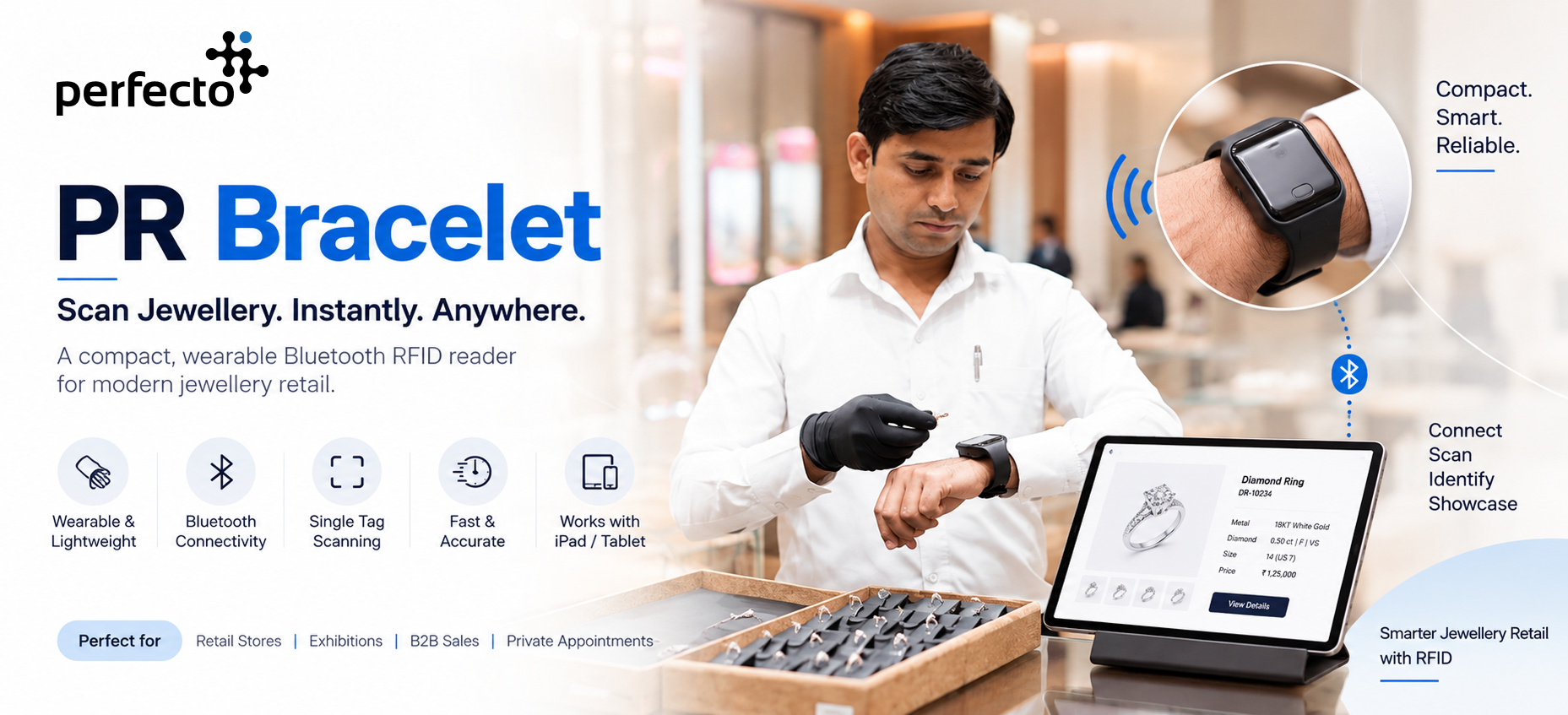
Retailers can also combine RFID with tablets and wearable readers to identify individual jewellery pieces during customer presentations, connecting inventory technology with assisted selling.
From Manual Counting to Connected Inventory
For jewellery businesses, inventory accuracy is not simply an operational metric. Every missing or incorrectly recorded piece can represent significant value.
RFID provides an opportunity to move from slow, manual stock verification toward faster and more connected inventory control.
The objective is simple:
Know what you have. Know where it should be. Count it frequently. Identify discrepancies faster.
As jewellery businesses become more digital and operate across stores, warehouses, exhibitions and multiple sales channels, RFID can provide the physical inventory layer needed to keep every jewellery piece accounted for.