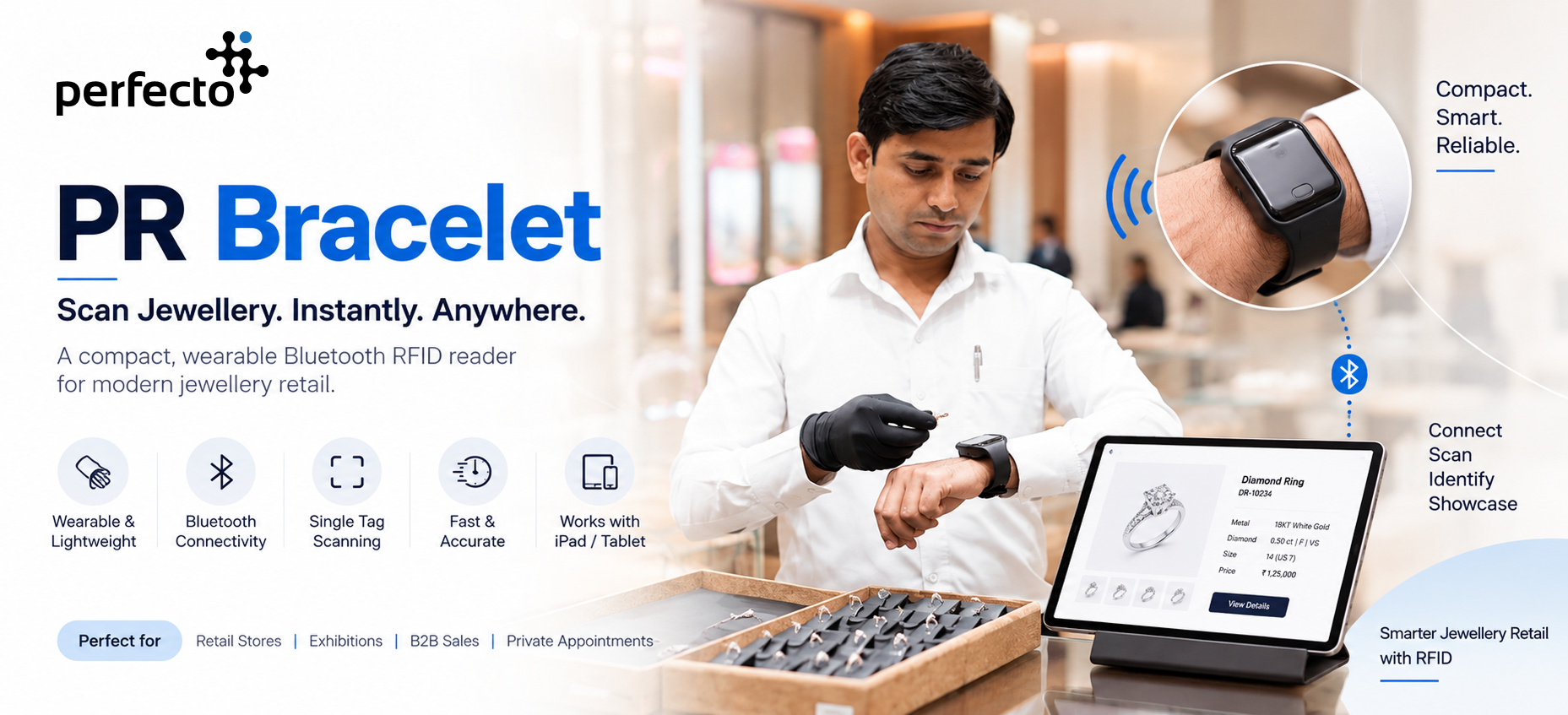
Tap, Scan, Showcase: Using Wearable RFID Readers with Jewellery Sales Apps
A customer wants to see the jewellery, hold it, try it on, compare designs and understand its details. At the same time, the sales executive may need to check the price, metal weight, diamond details, available variants and stock information on an iPad or tablet.
Jewellery selling is becoming increasingly digital, but the customer experience still depends heavily on the physical product.
A wearable RFID reader connected to a jewellery sales app can bridge these two experiences.
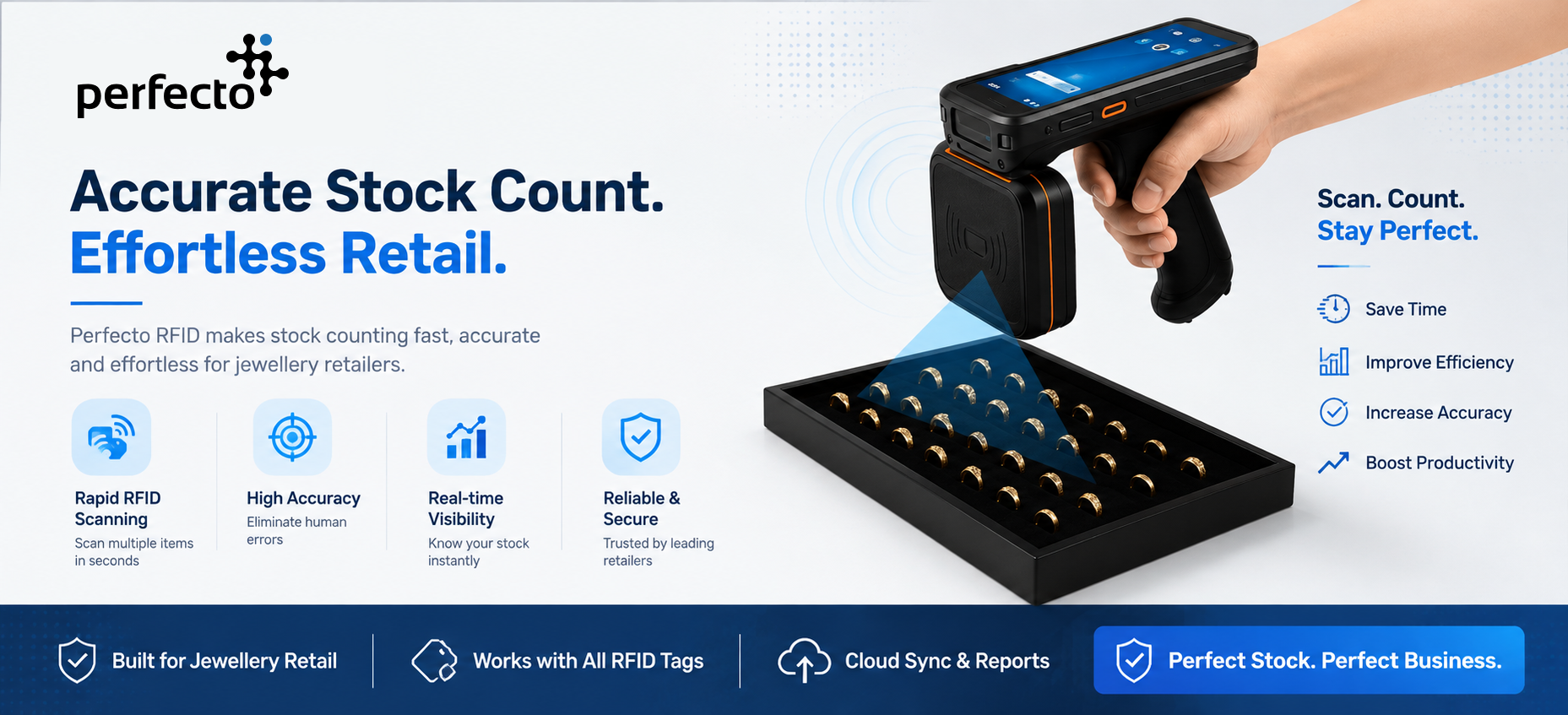
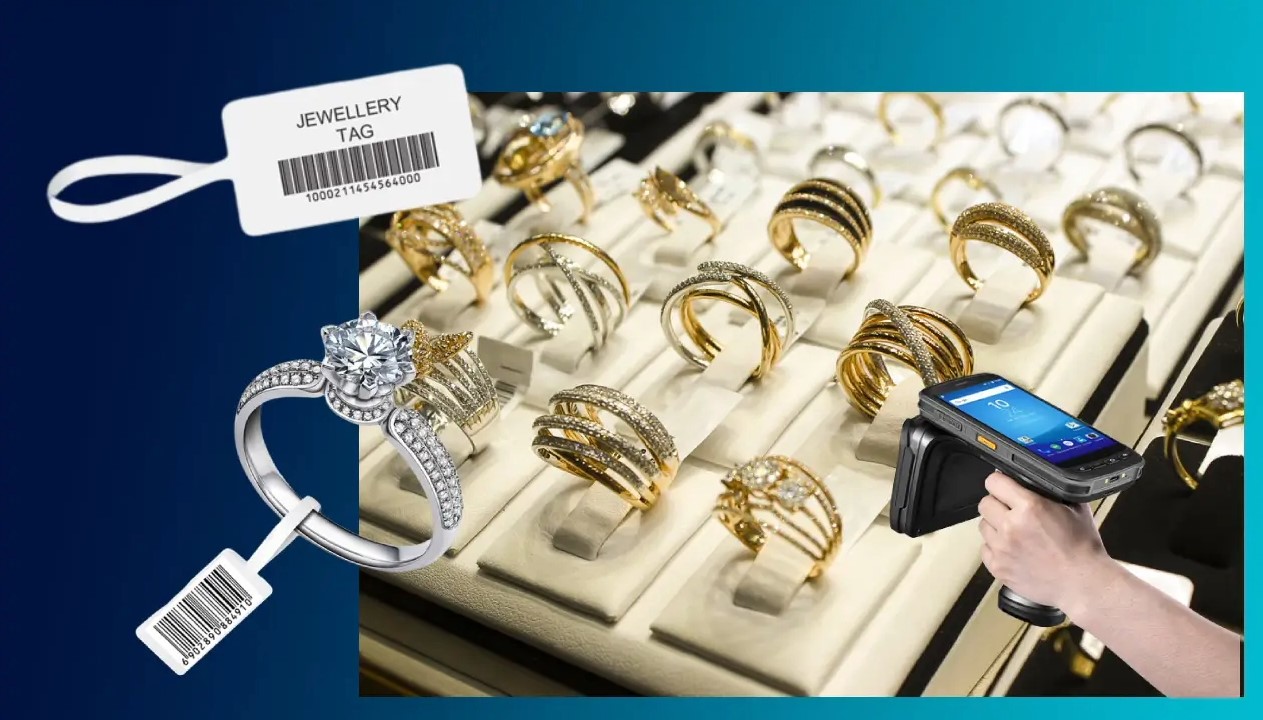
Instead of manually searching for a product in the app or typing a SKU every time a piece is shown, the salesperson can simply bring the RFID-tagged jewellery close to the wearable reader. The reader identifies the jewellery item and allows the connected iPad or tablet to display its product information instantly.
What Is a Wearable RFID Reader?
A wearable RFID reader is a compact RFID scanning device designed to be worn on the wrist, hand, finger attachment or lanyard, depending on the hardware design.
Unlike a conventional handheld RFID gun, a wearable reader keeps the salesperson's hands relatively free while interacting with products and customers.
For jewellery applications, a single-tag scanning wearable RFID reader can be especially useful. The objective is not necessarily to count an entire showcase at once. Instead, it is to identify the specific jewellery piece currently being presented to the customer.
The basic workflow becomes:
- Pick Product
- Scan RFID
- Identify Product
- Show Details on iPad
How Does It Work with an iPad or Tablet?
Imagine a customer enters a jewellery store looking for a diamond ring.
The sales executive opens the jewellery showcase application on an iPad and starts presenting physical products.
When a ring is picked up, its RFID tag is brought close to the wearable reader. The reader captures the unique RFID identity and sends it to the connected application.
The application matches that RFID identity with the corresponding product in the jewellery ERP or product catalogue.
Within seconds, the iPad can display important product information such as:
- Product images and videos
- Style and SKU
- Metal type, colour and karat
- Gold weight
- Diamond shape, colour and clarity
- Diamond pieces and carat weight
- Gemstone information
- Product price
- Available sizes
- Available metal or diamond variants
- Certification details
- Current stock availability
- Related or recommended designs
The salesperson therefore does not have to leave the customer, search through a large catalogue or manually enter product codes.
From Physical Jewellery to Digital Information
This is where RFID becomes more than an inventory technology.
Traditionally, RFID in jewellery retail is associated with stock counting, inventory reconciliation and item tracking.
A wearable reader creates another valuable use case: assisted product showcasing.
The physical jewellery itself becomes the trigger for its digital product page.
For example, when a salesperson presents a necklace, the wearable RFID reader can identify the necklace and the sales app can immediately display the necklace on the iPad along with its specifications, images and price.
Scanning another necklace changes the displayed product information accordingly.
This creates a natural connection between the physical showcase and digital catalogue.
Why Single-Tag Scanning Makes Sense During Product Showcase
Bulk RFID reading is extremely useful when performing inventory counts. A reader can identify many tags rapidly, helping stores count large quantities of jewellery.
However, product showcasing has a different requirement.
If a salesperson is showing one ring to a customer, the system needs to know exactly which ring is currently being discussed.
A short-range or controlled single-tag RFID scanning workflow helps reduce the possibility of unintentionally selecting nearby jewellery.
| RFID Use Case | Primary Purpose |
|---|---|
| Bulk RFID Reading | Inventory counting, stock verification and reconciliation |
| Single-Tag Wearable RFID Reading | Product identification and assisted jewellery showcasing |
Both use cases can connect to the same jewellery software ecosystem.
A Better Experience for Sales Executives
Consider a store carrying thousands of jewellery designs and variants.
It is unrealistic to expect every salesperson to remember the complete details and latest prices of every piece.
A connected RFID sales application can provide the information instantly.
The salesperson can focus on the customer while the system handles product identification.
It can also reduce dependence on printed tags or manually searching by SKU.
This becomes particularly useful when jewellery prices are dynamic because of changes in gold rates, diamond prices, making charges, margins, offers or customer-specific pricing.
The RFID identifies the product, while the jewellery software calculates and displays the latest applicable information.
Show Jewellery Variants Without Bringing Every Product
Another advantage of combining RFID with a digital catalogue is the ability to extend the physical showcase.
Suppose a customer likes a particular ring in 18KT yellow gold but wants to see whether it is available in rose gold.
After scanning the physical ring, the sales app can show other variants of the same style.
- Yellow Gold
- Rose Gold
- White Gold
- Different ring sizes
- Different diamond qualities
- Different stone combinations
The store therefore does not necessarily need every possible combination physically available in the showcase to explain the available choices.
Build a Customer Selection List
During a jewellery consultation, customers often compare multiple pieces before making a decision.
A sales application can make this process easier.
Every time a product is scanned, the salesperson could add it to a Customer Selection or Shortlist.
At the end of the consultation, the customer and salesperson can compare the selected jewellery based on images, specifications, prices and other attributes.
The shortlist could also be shared with the customer digitally, depending on the store's sales process.
This transforms RFID scanning into part of the overall customer journey rather than simply a stock-management activity.
Useful Beyond the Retail Counter
Jewellery Exhibitions
Sales executives may handle a large number of products while meeting buyers. A wearable reader connected to a tablet can help identify each product quickly and immediately open its corresponding digital information.
B2B Jewellery Sales
Manufacturers and wholesalers often present trays containing many designs to retailers.
Instead of manually entering design numbers, the salesperson can scan individual pieces and immediately access product information, pricing or availability.
Private Jewellery Appointments
During one-to-one consultations, a tablet-based presentation can provide a more premium and organized customer experience.
Mobile Sales Teams
Sales representatives carrying jewellery samples can use a tablet and compact RFID reader instead of relying entirely on printed catalogues and product sheets.
Connect RFID with Jewellery ERP
The real value comes when the RFID reader is connected to a complete jewellery software platform.
RFID provides the identity of the physical item, while the ERP provides the intelligence behind that identity.
The application can retrieve real-time information from different parts of the jewellery management system.
| System Component | Information / Function |
|---|---|
| Product Catalogue | Product images, specifications, designs and variants |
| Inventory | Current stock and product availability |
| Pricing Engine | Latest product price, gold rate, making charges and applicable pricing rules |
| Customer | Customer information and sales history |
| Offers | Applicable discounts and promotional offers |
| Sales Order | Quotation, selection and order creation |
For example, after scanning a product, the salesperson could check availability at another store, calculate the latest price, apply an eligible promotion and add the item directly to a quotation or sales order.
This creates a much more complete assisted-selling workflow.
RFID Can Support Both Operations and Sales
RFID should not be considered only as a back-office technology.
In jewellery businesses, the same RFID-enabled product can participate throughout its lifecycle.
| Stage | Potential RFID Application |
|---|---|
| Purchase / Inward | Identify and register incoming jewellery items |
| Inventory | Track and manage individual jewellery pieces |
| Stock Count | Quickly verify available inventory |
| Store Transfer | Track jewellery movement between locations |
| Product Showcase | Identify jewellery and display digital product information |
| Customer Selection | Add scanned products to customer shortlists |
| Sale | Connect the physical product with quotation or sales order |
This allows jewellery businesses to build a connected environment where the physical item and its digital record remain linked throughout the process.
The Future of Jewellery Showcasing Is Phygital
The future jewellery store does not have to choose between physical selling and digital selling.
Customers still want the emotional and tactile experience of trying on real jewellery. Digital technology should enhance that experience rather than replace it.
A wearable RFID reader connected with an iPad or tablet provides a simple example of this phygital retail experience.
The salesperson picks up the jewellery.
Scan. Identify. Showcase.
The customer sees the physical product, while the iPad provides the additional information needed to make an informed decision.
When RFID, jewellery ERP, dynamic pricing, inventory and digital catalogues work together, product showcasing becomes faster, smarter and more engaging.
For jewellery retailers, manufacturers, wholesalers and exhibition sales teams, wearable RFID can therefore become more than a scanning device. It can become a practical tool for modern assisted selling and customer engagement.